

The Paris-based company said it is creating caseins and dairy fatty acids with precision fermentation in order to develop cheeses that are virtually indistinguishable from the real thing, without the environmental, animal welfare and food safety problems associated with animal agriculture.After the successful pre-seed round, it now plans to launch its first industrial production of animal-free dairy ingredients within the next 24 months as a B2B company. “We will sell a ‘cheeseable milk’ solution to food partners,” a spokesperson explained to FoodNavigator. “We will offer formulated ingredients and the formulation know-how to help them develop and produce innovative, tasty and sustainable dairy products.”To make the caseins and dairy fatty acids, the Paris-based company programmes yeasts to produce milk proteins and fatty acids in exchange for mineral and plant nutrients in bioreactors. “Our animal-free ingredients have the same functional, nutritional and organoleptic characteristics as conventional animal ingredients,” we were told. “We then harvest these milk proteins and fatty acids and mix them with other ingredients to develop a reconstituted milk, which will coagulate and turn into cheese by fermentation. We are developing multiple subtypes of casein. Part of our process will be protected by our IP.” ‘Going beyond what’s available in the plant-based reign’The international cheese market is worth $200B and growing. Nutropy said its innovative approach, and its close collaboration with industrial cheese producers and French cheese specialists, mean it is primed to lead the development of a B2B ‘cheesable milk solution’ producing many types of cheese to expand the global cheese market to new frontiers.“As cheese lovers, we know the importance of cheese in our gastronomic culture and want to offer consumers a wide range of cheeses free of lactose and dietary cholesterol that are produced in an environmentally friendly and sustainable manner,” said Nutropy CEO Nathalie Rolland.The first products it is developing are premium aged French cheeses similar to Camembert. “Thanks to our tech and expertise we can develop many types of cheeses,” the spokesperson continued. “We decided to develop dairy fatty acids to improve the sensory profiles of our cheeses by going beyond what’s available in the plant-based reign and bringing us as close as possible in taste to animal cheeses.”A growing number of companies are using precision fermentation to make cheese and milk alternatives. The differentiator for Nutropy’s business is its own unique technology to produce and formulate our ingredients, it claimed. “We are the only company to provide a complete animal-free ‘cheeseable milk’ solution for plug and play use by dairy producers. Only a few companies are developing caseins and dairy fatty acids and not all companies have a food science team working on the development of animal-free cheeses, especially complex, premium cheeses.”The quest for more environmentally sustainable production methods is obviously a big draw of the precision fermentation sector. Nutropy claimed its process has the potential to use significantly fewer natural resources and limit the greenhouse gases and water pollution that accompany animal-produced dairy products.“We have reason to believe our processes will consume significantly fewer resources and pollute less than their animal counterparts. We have data on the production of animal-free products through fermentation and we are discussing with consultants and universities to work together on an LCA of our process once we reach higher scales.”Precision fermentation start-ups acknowledge that achieving scale is a hurdle to commercialisation. What’s more, the European Commission is yet to approve its first product made this way. Nutropy is therefore intent to demonstrate that fermentation-derived milk ingredients are a thriving and promising domain that is supported by an ecosystem of startups, medium and large sized companies across the value chain and research institutions. “We are active members of this ecosystem, through both Nutropy and the non-profit organization founded by our CEO, Agriculture Cellulaire France/CellAg France. Furthermore, the fact that fermentation-derived ingredients are an essential player in securing food sovereignty and reducing our environmental impact three times a day has been recognized by the existence of many recent European grants for our subject.”The €2M pre-seed round was led by venture firms Beast, Big Idea Ventures and Trellis Road. The round was supported by VegCapital, FoodHack, Techmind, a few international business angels with experience in technology, food technology and agriculture and the French government.“We’ve long been convinced of the critical role of casein in the shift away from animal cheese products,” said Anna Ottosson, founding partner at Trellis Road.”We are excited about Nutropy’s technology and the quality of the products the team has been able to produce. I tried their premium cheese at one of our events, and the texture and taste were indistinguishable from premium, animal-based cheese. Using bio-identical ingredients is a game changer,” added Andrew D. Ive, Founder and Managing General Partner of Big Idea Ventures. .


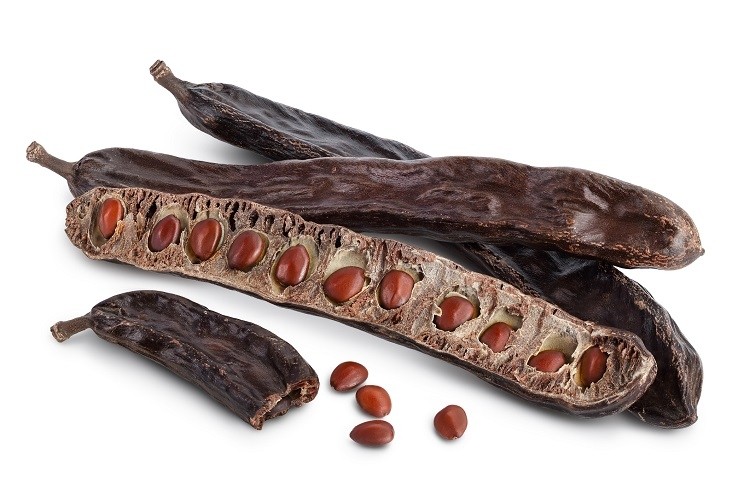 Carob is one of the key ingredients in WNWN’s product. GettyImages/kolesnikovsergHowever, carob is chocolatey, stressed the CTO, and the combination of carob and fermented barley makes for a ‘deliciously chocolatey profile’. WNWN’s carob is grown in Spain and Italy and is certified organic. “Production of carob is very sustainable and not mired by the sorts of deforestation problems that cacao is,” said Dr Drain.Without cacao, there is no cocoa butter. Instead WNWN is sourcing shea fat from Ghana.“All the ingredients we are sourcing and sustainable, organic, and high-quality,” said Pak. “We’ve gone to several lengths to ensure our supply is so. We’re looking to create long-lasting relationships with local farmers.”Nutritional and flavour profile for humans…and doggos!The start-up’s first product is a dairy-free premium dark chocolate alternative. Its nutritional profile is ‘very similar’ to conventional chocolate – albeit containing slightly less sugar.While the product’s full flavonoid and antioxidant profiles are not yet fully understood by WNWN, it plans to investigate its potential health benefits.One obvious upside of WNWN’s product, compared to chocolate, will be appreciated by consumers’ four-legged friends, suggested Dr Drain. Dogs cannot eat conventional chocolate due to its theobromine content, which they are unable to metabolise effectively.WNWN’s alt choc does not contain theobromine. “Your doggo can eat our chocolate,” said the CTO. “We’ve tested it on some dogs…and they absolutely go wild for it.”
 WNWN’s premium dark chocolate product is made from two ‘hero ingredients’: barley and carob. Image source: WNWNSo does WNWN’s alt choc product taste like chocolate? “We’re trying to replicate the experience of chocolate,” the CTO explained.In terms of flavour, the start-up has achieved the archetypal bitterness associated with dark chocolate, as well as its ‘fruity acidity’. “We have red berries, prunes, notes of butterscotch in the long finish and a maltiness coming through from the barley.”“It’s a flavour profile that is very similar to that of premium dark chocolate: lots of acidity and brightness, complexity, and bitterness.”WNWN is working on an alternative to milk chocolate which is more ‘neutral’ in flavour, making for a ‘creamy’ experience with less acidity.The experience of chocolate, however, does not lie in flavour alone. The start-up wants the melt, snap, and baking properties of chocolate, and for the most part, it has been successful. If there was one element it hasn’t quite perfected just yet, it’s the ‘snapability’, Dr Drain revealed, “but we’re almost there”.First chocolate, next coffee and vanilla?WNWN is launching its first product next week direct-to-consumer. Initially targeting the 18–45-year-old eco-conscious consumer, the company expects the target market with grow as it develops more products, including a ‘mass market range’.
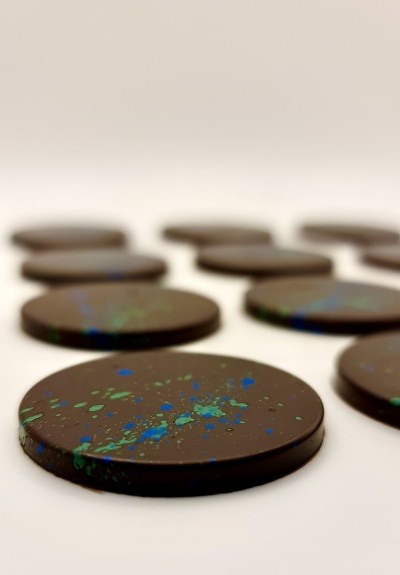 The start-up’s limited-release choc this are launching next week. Image source: WNWN“Pretty much anyone who likes the taste of chocolate should like our product,” said Pak.A box of WNWN’s limited-release choc thins will retail for around £10, ‘on par’ with the price range of premium chocolate. In the future, its mass market range with sit within the mass market price bracket of around £3-4, we were told.The B2C sales model is just the ‘first step’, however. Currently, it means WNWN can take a bigger role in educating shoppers and creating ‘fun products’. Once consumer demand is established, the business plans to expand into B2B ingredient sales.“We can supply our product in both chocolate mass and cocoa powder form, so that is the ultimate aim. Impact only comes with scale.” And WNWN doesn’t plan on stopping there. It is an ingredients company more than anything, the CEO suggested, and chocolate is only one product with problematic supply chains.“Chocolate is our first project, and then we’ll be moving into other products, such as coffee and vanilla.” .