
TOKYO, Oct 13 (Reuters) – A joint venture set up by Japan’s Sony Group Corp (6758.T) and Honda Motor (7267.T) is aiming to deliver its first electric vehicles by 2026 and will sell them online, starting in the United States and Japan.The new EV will also be priced at a premium, offering a new software system developed by Sony that would open the way to recurring revenue from entertainment and other services that would be billed monthly, the companies said.The update from the joint venture, Sony Honda Mobility, is the first since the two companies launched the project in June.Register now for FREE unlimited access to Reuters.comKey details, including pricing, battery range and even the platform for the new vehicle have not been determined, but representatives of the new company detailed a vision for a vehicle that would function almost like a rolling smartphone.Sony will provide the software system for the new car, from the onboard controllers to cloud-based services that will connect with entertainment and payment systems.It will also provide sensors and other technology for a Level 3 autonomous drive system that will allow for drivers to pay more attention to the content and software services that will be offered.In Level 3 systems, also known as limited self-driving automation, drivers can ride without watching the road or handling the wheel on highway driving but need to be ready to take back control.Tesla (TSLA.O), General Motors(GM.N), Ford Motor Co (F.N) and Mercedes Benz(MBGn.DE) all offer some form of hands-free driving assist systems.“As safe driving technology will continue to evolve and the amount of concentration required to drive will be reduced, we should consider new ways to enjoy and spend time in the cabin space as a whole,” said Izumi Kawanishi, the joint venture’s president and executive at Sony.Honda will decide on the platform that the new vehicle will use and details like the battery supplier. The still-to-be named EV will likely be manufactured by Honda at one of its plants in Ohio.Honda, like its bigger rival Toyota Motor (7203.T), has been slow to shift its fleet to electric. It has also struggled over the years to make gains in the luxury vehicle market with its Acura brand.Yasuhide Mizuno, the joint venture’s chairman and chief executive, and a senior Honda executive, said the project was important for Honda to develop a “longer-term relationship” with its car buyers as the vehicle shifts to become more of a connected device.Mizuno said Honda believed that 2025 would be a crucial year in the shift toward EVs in the U.S. market and that the joint-venture believed it had to hit that opening even though it means a compressed development cycle for the new EV.The new EV will be delivered to the Japanese market in the second half of 2026. The two companies are considering a launch for Europe, but no plan has been set. Orders for the new EV should open in 2025, the companies said.($1 = 146.8300 yen)Register now for FREE unlimited access to Reuters.comReporting by Satoshi Sugiyama; Editing by Ana Nicolaci da CostaOur Standards: The Thomson Reuters Trust Principles. .
Premium bicycles win new fans among China’s city folk
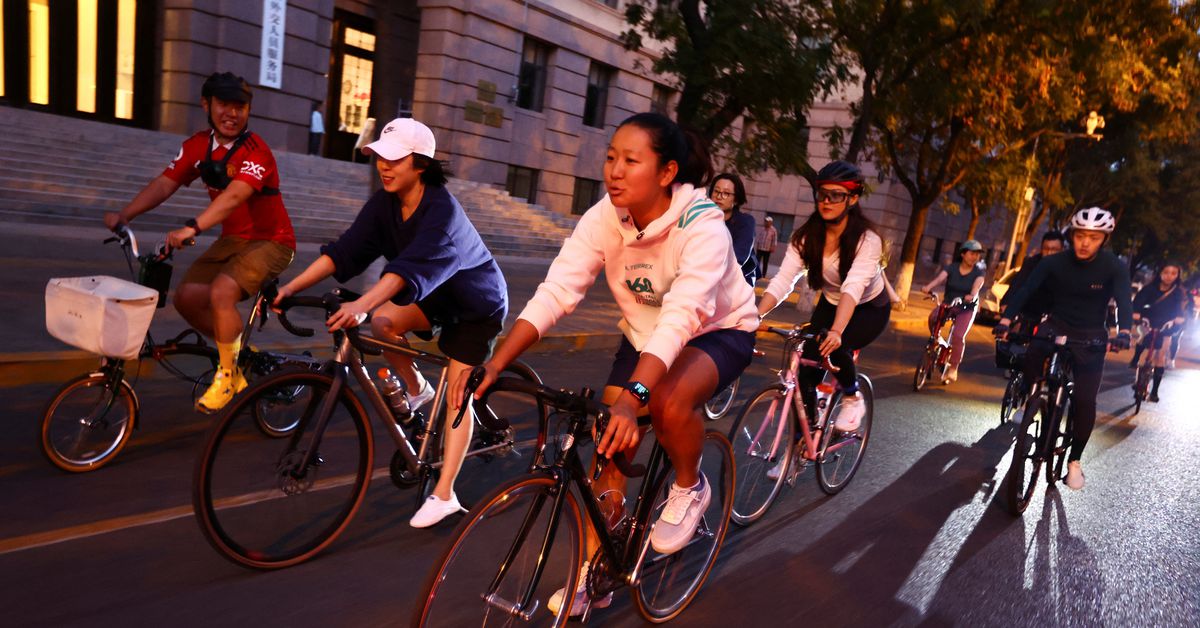
Register now for FREE unlimited access to Reuters.comBEIJING, Sept 13 (Reuters) – Zhou Changchang likes to spend his spare time cruising along the streets of China’s capital with his cycling club friends, on his Tiffany Blue bicycle made by the British company Brompton.The 42-year-old teacher is part of a growing army of cycling enthusiasts in China, who are splashing out on premium bicycles made by the likes of Brompton, Giant and Specialized, fuelling a market that consultancy Research & Markets estimates could be worth $16.5 billion by 2026.Social media and e-commerce platforms say there has been a surge of interest in cycling over the past year and sales of bicycles and gear are booming.Register now for FREE unlimited access to Reuters.comTypically, Chinese cyclists will pay more than 13,000 yuan ($1,870) for an inner-city, high-end foldable bike made by the likes of Brompton. High-performance road bikes, made for longer journeys, start at around 10,000 yuan ($1,450) and can go many times higher.Last month, media reported that a bicycle made by luxury brand Hermes sold for 165,000 yuan ($24,500).”The majority of riding hobbyists are willing to splurge,” e-commerce platform JD.com said last month.It said road bike sales on its platform had more than doubled from June to August compared with the same time last year, while riding apparel sales had jumped 160%.China has had a long love affair with bicycles and was once known as the “kingdom of bicycles”.For decades, bikes made by the likes of the Flying Pigeon company filled the streets.Cycling fell out of fashion when a growing middle class turned to cars but bike manufacturers saw a revival in 2014 as bike-sharing companies like Mobike and Ofo sprang up to flood cities with their fleets, offering rides as cheap as 1 yuan.Zhou, like many cyclists, said he got into biking to get fit. COVID-19 and its lockdowns also created a urge for the open road.”I really longed for the outdoors and fresh air,” said Shanghai office worker Lily Lu who went out and ordered a Brompton bike for 13,600 yuan ($1,965) the day after she was released from a three-month lockdown.As the craze gathers pace, manufacturers are struggling to meet demand. Lu said she had to wait two months to get her bicycle. Brompton did not respond to a request for comment.China’s Pardus, which makes racing bikes that can cost more than 30,000 yuan ($4,335), said sales doubled from last year and its factory was operating around the clock.”Everything is out of stock,” said Pardus branding director Li Weihai.
($1=6.96 yuan)Register now for FREE unlimited access to Reuters.comReporting by Sophie Yu, Brenda Goh; Editing by Robert BirselOur Standards: The Thomson Reuters Trust Principles. .

Mitsubishi pays record premium for Vietnam oil for power generation – sources
A man walks past in front of a sign board of Mitsubishi UFJ Trust and Banking Corporation, the asset management unit of Japan’s Mitsubishi UFJ Financial Group Inc. (MUFG), in Tokyo, Japan July 31, 2017. REUTERS/Issei KatoRegister now for FREE unlimited access to Reuters.comSINGAPORE, July 20 (Reuters) – Mitsubishi Corp bought a cargo of Vietnamese crude for loading in September on behalf of Japanese utilities at a record premium for the grade, traders said on Wednesday.The purchase comes after Nippon Steel bought a liquefied natural gas (LNG) cargo at the highest price ever paid in Japan. The world’s No. 2 LNG importer is scrambling for power fuels as a global heatwave drives electricity demand this summer. read more “Japan has a power shortage, so it has to pay up. Other countries also have the same problem now, especially in Europe,” one of the traders said.Register now for FREE unlimited access to Reuters.comMitsubishi paid a premium of $21 a barrel to dated Brent for the 300,000-barrel cargo of Vietnamese Chim Sao crude, said two of the traders who regularly track the grade.That puts the cost of the cargo at about $127 a barrel based on current Brent prices, or $38.1 million.Mitsubishi does not comment on individual deals, a spokesperson said.Japan last imported Chim Sao crude in February and April, according to Refinitiv data.Register now for FREE unlimited access to Reuters.comReporting by Florence Tan, Additional reporting by Nobuhiro Kubo in Tokyo; Editing by Louise HeavensOur Standards: The Thomson Reuters Trust Principles. .
Swedish Match top 10 investor says Philip Morris bid a ‘healthy premium’
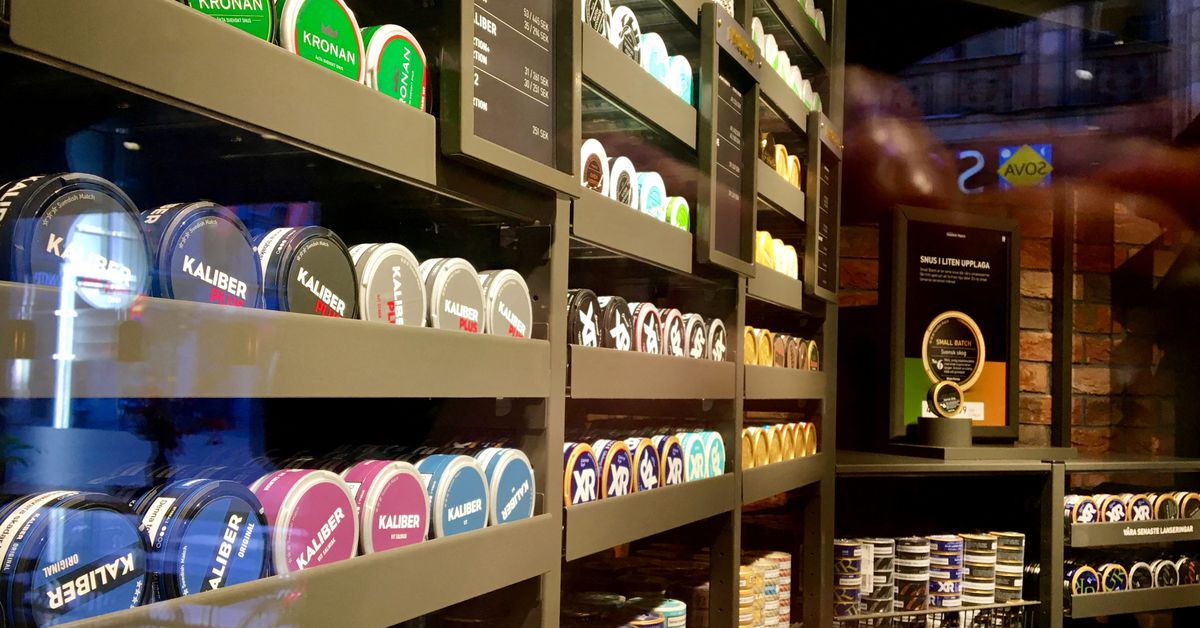
Moist powder tobacco “snus” cans are seen on shelves at a Swedish Match store in Stockholm, Sweden October 24, 2018. Picture taken October 24, 2018. REUTERS/Anna Ringstrom/File PhotoRegister now for FREE unlimited access to Reuters.comLONDON, May 12 (Reuters) – Philip Morris’ $16 billion offer for Stockholm-based Swedish Match (SWMA.ST) represents a “healthy premium” and the Marlboro maker could yet go higher, Swedish Match’s No. 10 shareholder GACMO Investors (GBL.N) said on Thursday.Marlboro maker Philip Morris agreed on Wednesday to buy Swedish Match, one of the world’s biggest makers of oral nicotine products. These include Snus – a sucked tobacco product the firm says is less harmful than smoking – as well as Zyn nicotine pouches, which are used the same way and tobacco-free.Kevin Dreyer, co-chief investment officer, value, at GAMCO identified Japan Tobacco Inc (2914.T) (JTI) as a possible rival bidder but said it would be hard-pressed to hijack the deal. GAMCO, formerly known as Gabelli Asset Management Company, owns just over 2% of Swedish Match, according to Refinitiv.Register now for FREE unlimited access to Reuters.com“PMI has very deep pockets and will be a tough company to out-bid,” he said. “This deal is really the culmination of the last five-to-seven years of work Swedish Match has done in developing Zyn into the leading brand, and having that advantageous market share – it’s an attractive stock.”Philip Morris declined to comment. Swedish Match and JTI did not immediately respond to a request for comment.Philip Morris needs at least 90% of shareholders to approve the deal for it to succeed. Some other shareholders have questioned whether the Philip Morris offer represents good value. Swedish Match shareholder Bronte Capital said on Wednesday the price Philip Morris agreed to pay was “unacceptable”.Register now for FREE unlimited access to Reuters.comReporting by Richa Naidu; editing by David Evans and Emelia Sithole-MatariseOur Standards: The Thomson Reuters Trust Principles. .

Japan buyers agree to Q2 aluminium premium of $172/T, sources say
Containers are seen at an industrial port in the Keihin Industrial Zone in Kawasaki, Japan September 12, 2018. REUTERS/Kim Kyung-HoonRegister now for FREE unlimited access to Reuters.com
- Initial offers made by producers were $195-$250/T
- Second straight quarterly price fall
- Contrast to soaring premiums in Europe and the U.S.
TOKYO, April 7 (Reuters) – The premium for aluminium shipments to Japanese buyers for April to June was set at $172 a tonne, down 2.8% from the previous quarter, as weak demand in Japan and China outweighed concerns of supply disruptions from Russia, five sources said.The figure is lower than the $177 per tonne paid in the January-March quarter and marks a second consecutive quarterly drop. It is also lower than initial offers of $195-$250 made by producers. read more Japan is Asia’s biggest aluminium importer and the premiums for primary metal shipments it agrees to pay each quarter over the benchmark London Metal Exchange (LME) cash price set the benchmark for the region.Register now for FREE unlimited access to Reuters.comThe sources, who were directly involved in pricing talks, declined to be identified because of the sensitivity of the discussions.One of them, who works at a Japanese trading house, said the decline in premiums reflected weak demand from the automobile sector as it deals with a chip shortage, as well as amply supply in Asia as China has increased exports of semi-manufactured metals.A tight container market and high freight rates also made it difficult for the metal to be shipped from Asia to Europe or North America where premiums are much higher, the source said.China is increasing exports of aluminium to fill a widening supply gap in Western markets. read more Global suppliers such as Rio Tinto (RIO.AX) and South32 (S32.AX) and Japanese manufacturers of rolled products and trading houses began price negotiations in early March. The talks took longer than usual because of uncertainty about exports from Russia as a result of sanctions following its invasion of Ukraine.Russia accounted for 17% of Japan’s total imports of primary aluminium ingots in 2021 and 6% of global aluminium supply.Concerns about the impact of disrupted Russian shipments as well as reduced output because of high power prices drove aluminium prices to a record high of $4,073.50 a tonne in early March.The duty-paid physical premiums in Europe and the United States have soared to $595 a tonne and $880 a tonne, respectively, while Asia’s spot premiums have remained around $110-170 a tonne this year, the sources said.Another of the sources said so far Russia’s Rusal had maintained shipments to Japan, which made global suppliers retreat from high initial offers.However, another of the sources said Asian supplies might get tighter as “global traders have been collecting primary aluminium from several locations in Asia and sending them to Europe or North America by chartering bulk ships to take an advantage of higher premiums”.Register now for FREE unlimited access to Reuters.comReporting by Yuka Obayashi; Editing by Himani Sarkar and Barbara LewisOur Standards: The Thomson Reuters Trust Principles. .