
Hindus and Muslims must give up rigid positions on contested places of worship

Hindus and Muslims must give up rigid positions on contested places of worship

Simt-e-Kashi se chala janib-e-Mathura baadal — starting from Kashi the cloud advanced towards Mathura — are the deeply devotional words with which an Urdu writer of the recent past, Mohsin Kakorvi, had begun his poetic eulogy for Prophet Muhammad. Long before him, the uncrowned king of Urdu poetry for all times Asadullah Khan Ghalib had visited the holy city then known as Banaras and written a poem in Persian on its spiritual grandeur. Titled Charagh-e-Dair (Light of Temple), the poem described the city as “jannat-e-khurram” (blessed paradise) and “firdaus-e-mamur” (exalted heaven). Freedom-fighter Hasrat Mohani once went to Mathura on Janmashtami and pleaded with Lord Krishna: “Hasrat ki bhi qubool ho Mathura mein haziri, suntey hain aashiqon pe tumhara karam hai aaj” (Accept my pilgrimage to Mathura too, I hear you are today exceptionally kind to devotees). More recently, Anwar Jalalpuri translated the Srimad Bhagwad Gita into Urdu, with an eminently readable reverence, under the title, “Naghma-e-Ilm-o-Amal” (hymnody of wisdom and virtue). Unfortunately, these tributes to India’s spiritual figures and holy places are lying in oblivion. The masses remember only what a medieval-age despotic Muslim ruler had supposedly done to some ancient shrines in these holy cities.


Going by the ground realities in the country, Muslim citizens cannot keep sailing against the tide. There is no use loudly invoking provisions of the nation’s professedly secular Constitution. That quasi-secular charter of governance adopted over seven decades ago includes several religious concessions for chosen communities and leaves ample scope for their reasonable expansion. Time and again it has been modified — well over a 100 amendments in 70 years — and keeps the doors open for further changes. Devised by the first-generation nationalists, this statute of governance may not be seen now as a sacrosanct rulebook, perpetually binding on all future generations. No jurisprudential discourses on interpretation of statutes can perhaps dissuade the present-day nationalists from reading its provisions in accordance with their ideology.
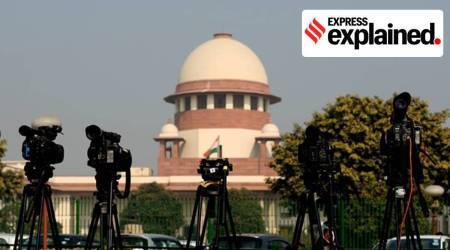
The Places of Worship (Special Provisions) Act of 1991, as a parliamentary legislation, has even an inferior status. However, in the Ayodhya temple case decided in 2019 by a five-judge bench of the Supreme Court it was projected as a law falling within the parameters of the inviolable basic structure of the Constitution. This doctrine of constitutional jurisprudence was laid down by an 11-judge bench of the court half a century ago. It is to be seen to what extent can this doctrine and its possible dimensions be preserved by the apex court in the present-day circumstances.Best of Express PremiumSC directions on sex workers: history of the case, and where it stands nowPremiumCruise drug raid case: One officer went rogue, agency looked other wayPremiumHindus and Muslims must give up rigid positions on contested places of wo...PremiumJathedar of Akal Takht wants harmonium replaced from Gurbani sangeet; but...Premium
What is, then, the way out? The solution indeed lies in the thinking and conduct of — to use the Constitution’s prefatory terminology — “We the people of India” who together constitute this great nation. It is for us to join hands to preserve peace in our beloved nation, no matter what cost is to be paid for it. Religious freedom here has its own limits for all, be it any particular minority or the dominant majority. Obstinacy and fanaticism on either side will lead us nowhere. If a minority rigidly sticks to its demands on religious grounds, the dominant majority cannot be expected to be lagging behind. Both have to find together a viable roadmap to nationwide peace. On the holy soil of India, there are millions of old and new temples, mosques, churches and gurdwaras. In such a country, perennial fighting over a few chosen shrines situated in each other’s vicinity is irrational and indefensible. An amicable settlement of these disputes in the interest of peace in the country — even if not absolutely fair to all factions, it will not be an unconscionable bargain for them.
The judiciary in a predominantly non-Muslim country cannot be expected to be always protecting religious sentiments of the minorities by a watertight adherence to the secular tenor of the Constitution. Balancing competing claims in religious disputes of large magnitude and dispeling even remote chances of perpetual friction in the society form part of the judiciary’s Constitutional obligations. Glimpses of the apex court’s concerns and constraints in this regard can be seen in a number of its past decisions. In an old case the Lahore High Court had held that “the view that once consecrated a mosque always remains a place of worship as a mosque is not the Mohammedan law of India as approved by the Indian courts” — and the observation was later endorsed by the Privy Council in the Masjid Shahidganj case of 1940. Affirming it in Ismail Faruqui (1995), the Supreme Court had even added that the mosque is “not an essential part of the practice of the religion of Islam” — and had later summarily dismissed a plea for omitting these words from the judgment. And then, above all, there is the Constitution Bench decision of 2019 in the Ayodhya dispute.
Buy Now | Our best subscription plan now has a special price
If the Kashi-Mathura disputes are finally adjudicated upon by the nation’s top court, whatever decision it gives in the interest of peace and harmony should not raise eyebrows. Hopefully, the court will direct necessary measures to be adopted for not allowing the fire to escalate and engulf other places of worship — of whichever community and wherever in the country — and certainly never to any of the national heritage sites. Strict measures are also required to be devised to curb the now free-for-all pastime of denigrating the Muslim religion and throwing mud on their highly revered Prophet.
As regards the Muslims, they must remember Prophet Muhammad’s exclamation, recorded in authentic collections of his sayings, that he smelt “areej-ul-ruhaniyah” (fragrance of spirituality) coming from India. It is the sacred obligation of the Muslim leadership in the country to not let it be turned into a dar-ul-harb (abode of hostility) by adopting a confrontationist attitude. They must ensure, at whatever cost they have to pay, that our motherland remains a dar-ul-aman (abode of peace) which it has so far been under the Islamic theories of statecraft.
The writer is professor of Law & former member, Law Commission of India

!function(f,b,e,v,n,t,s)
{if(f.fbq)return;n=f.fbq=function(){n.callMethod?
n.callMethod.apply(n,arguments):n.queue.push(arguments)};
if(!f._fbq)f._fbq=n;n.push=n;n.loaded=!0;n.version=’2.0′;
n.queue=[];t=b.createElement(e);t.async=!0;
t.src=v;s=b.getElementsByTagName(e)[0];
s.parentNode.insertBefore(t,s)}(window, document,’script’,
‘https://connect.facebook.net/en_US/fbevents.js’);
fbq(‘init’, ‘444470064056909’);
fbq(‘track’, ‘PageView’);
.


Be clear on cotton | The Indian Express

Be clear on cotton | The Indian Express

After wheat, there is pressure building up for banning exports of raw cotton. The Narendra Modi government must resist any such demand emanating from domestic textile mills and the garment industry. There are at least three reasons why this is so. To start with, the output of one industry is often the input of another. In this case, cotton is spun by mills into yarn, which is further woven or knitted into fabric used for making garments. During the year ended March 31, 2002, India exported $2.8 billion worth of raw cotton, $5.5 billion of cotton yarn, $8.2 billion of cotton fabrics and made-ups, and $9 billion of cotton ready-made garments. Will spinning mills seeking a ban on cotton shipments agree to the same in respect of yarn? When exports are happening at every stage of the value chain, how can there be pick and choose on which one to disallow or promote?
Secondly, while it is true that cotton prices have risen by around 50 per cent since the start of 2022, this cannot be blamed just on exports — which are actually expected to halve in the current marketing season (October-September) compared to 2020-21. Domestic prices increasing to international parity levels should, by itself, slow down exports in the natural course. The Modi government did the right thing last month by scrapping the import duty on cotton. It should, in fact, remove the 10 per cent duty on yarn imports as well. The correct approach to tackling inflation, whether in wheat, cotton or yarn, is by allowing duty-free imports without putting fetters on exports. The third reason has to do with timing. Sowing of cotton has already started in Punjab, Haryana and Rajasthan. Plantings in Gujarat, Maharashtra, Telangana and other states will also take off with the arrival of the southwest monsoon rains. High prices would definitely incentivise farmers to expand acreage this time; banning exports will send the opposite signals to the ultimate detriment of the textile industry.
The real problem in cotton that needs addressing is yields. The introduction of Bt cotton in the early 2000s led to India’s production going up about 2.5 times to 398 lakh bales by 2013-14. Since then, it has been on a falling trajectory, with the latest output estimate for 2021-22 at below 325 lakh bales. The plants incorporating Bt genes have over time developed susceptibility to pink bollworm and whitefly insect pests, reducing yields and also farmer enthusiasm for growing cotton. The Modi government’s succumbing to uninformed lobby pressures against genetic engineering technologies has not helped matters. A clearheaded approach is required for this crop, which is a source of not just fibre (lint), but also food (cotton-seed oil) and feed (oil-cake).

!function(f,b,e,v,n,t,s)
{if(f.fbq)return;n=f.fbq=function(){n.callMethod?
n.callMethod.apply(n,arguments):n.queue.push(arguments)};
if(!f._fbq)f._fbq=n;n.push=n;n.loaded=!0;n.version=’2.0′;
n.queue=[];t=b.createElement(e);t.async=!0;
t.src=v;s=b.getElementsByTagName(e)[0];
s.parentNode.insertBefore(t,s)}(window, document,’script’,
‘https://connect.facebook.net/en_US/fbevents.js’);
fbq(‘init’, ‘444470064056909’);
fbq(‘track’, ‘PageView’);
.
Former interim CBI director discovers that sarkari privilege does not translate to social media influence

Former interim CBI director discovers that sarkari privilege does not translate to social media influence

There are jobs at the higher echelons of government service that come with perks most working people can only dream of: Free healthcare, a pension for life, job security, etc. But perhaps the greatest privilege, the one that seems the hardest to shake off, is a socially-sanctioned sense of entitlement. For the officer, in his Ambassador (or its imported equivalent), people and traffic part like the Red Sea for Moses, queues disappear, train tickets are magically booked, thanks to the “lal batti” and all it stands for. Unfortunately, as former interim director, CBI, M Nageswara Rao recently discovered, not all privilege lasts forever.
Rao has now moved the Delhi High Court twice in as many months demanding that Twitter restore the “blue tick” — given to verified accounts — that his handle once enjoyed. On Tuesday, while dismissing his second writ petition, the court ordered that he pay a fine of Rs 10,000. Clearly, the petitioner did not understand rejection. Or, even more significantly, that a blue tick — like the lal batti — is a privilege that can be temporary. It is certainly not a matter over which a high court need exercise its original jurisdiction.
But perhaps the retired IPS officer should not be judged too harshly. After all, unthinking entitlement — in essence, confusing rights for privileges, discretion for discrimination — may just be the inevitable outcome of years in power. Unlike regular working folk, who struggle with job precarity and no pensions, an All-India Service officer is rarely told that he does not deserve institutional recognition and backing, that he is just one among the millions with a voice on the internet. Most people, the voiceless, find on places like Twitter — for better and often worse — a chance to be heard. For the babu, being a part of that cacophony itself appears to be traumatic.

!function(f,b,e,v,n,t,s)
{if(f.fbq)return;n=f.fbq=function(){n.callMethod?
n.callMethod.apply(n,arguments):n.queue.push(arguments)};
if(!f._fbq)f._fbq=n;n.push=n;n.loaded=!0;n.version=’2.0′;
n.queue=[];t=b.createElement(e);t.async=!0;
t.src=v;s=b.getElementsByTagName(e)[0];
s.parentNode.insertBefore(t,s)}(window, document,’script’,
‘https://connect.facebook.net/en_US/fbevents.js’);
fbq(‘init’, ‘444470064056909’);
fbq(‘track’, ‘PageView’);
.

SC decision in Perarivalan case should send strong signals to governors who stonewall state government decisions

SC decision in Perarivalan case should send strong signals to governors who stonewall state government decisions

On Wednesday, a three-judge bench of the Supreme Court set free A G Perarivalan bringing a closure to the more than the three-decade-long battle waged by the 50-year old convict in the Rajiv Gandhi murder case. The relief provided by the Court was long overdue — Perarivalan’s prolonged incarceration was inhuman. But the verdict is also seminal for another reason: It clarifies constitutional issues that have resulted in numerous face-offs between state governments and governors in recent times, resulting in inordinate delays in policy implementation.

Perarivalan was sentenced to death by a TADA court in 1998, a verdict upheld by the SC a year later. In 2014, the SC commuted the sentence to life imprisonment. A year later, Perarivalan submitted a plea to the Tamil Nadu governor, seeking release under Article 161 of the Constitution. When this petition fell on deaf ears, he moved the SC which, in September 2018, put the ball back in the Raj Bhavan’s court. Days after this directive, the then AIADMK government of Tamil Nadu recommended the release of all the convicts in the Rajiv Gandhi assassination case. It would be another two-and-a-half years before the governor would forward the file to President Ram Nath Kovind. During this period, the governor was called out by the state high court as well as the SC for inaction. Now, the apex court has come down strongly again on the Raj Bhavan. On Wednesday, it ruled that the state government’s advice to the governor with respect to remission pleas under Article 161 is binding and there was no need to refer the matter to the President. The vacillation over Perarivalan’s petition was, therefore, “inexplicable,” and “inexcusable,” it held.
The verdict reaffirms a cardinal principle of the country’s polity: “The Governor occupies the position of the head of the executive in the State but it is virtually the Council of Ministers in each State that carries on the executive Government.” This should send a strong signal to governors in several states who have been stonewalling state government decisions. The recent friction between the two authorities in TN over the NEET exam is a case in point. In fact, according to a report in this newspaper, at least 20 bills or state government recommendations await the TN governor’s decision, as of March end. Raj Bhavans in West Bengal and Kerala too have collided frequently with governments over policy matters. The verdict should put an end to such bickering.

!function(f,b,e,v,n,t,s)
{if(f.fbq)return;n=f.fbq=function(){n.callMethod?
n.callMethod.apply(n,arguments):n.queue.push(arguments)};
if(!f._fbq)f._fbq=n;n.push=n;n.loaded=!0;n.version=’2.0′;
n.queue=[];t=b.createElement(e);t.async=!0;
t.src=v;s=b.getElementsByTagName(e)[0];
s.parentNode.insertBefore(t,s)}(window, document,’script’,
‘https://connect.facebook.net/en_US/fbevents.js’);
fbq(‘init’, ‘444470064056909’);
fbq(‘track’, ‘PageView’);
.
Food inflation has not started to hurt India yet. Stepping up production can help country duck global trend

Food inflation has not started to hurt India yet. Stepping up production can help country duck global trend

A considerable part of the RBI’s statement accompanying its last week’s exceptional monetary tightening measures focused on the challenges arising from food inflation. That problem, till recently, was largely confined to edible oils (from soaring international prices even prior to the Russia-Ukraine war) and the likes of onion and tomato (due to unseasonal heavy rains). But now there is fear of food inflation getting “generalised”. The Food and Agriculture Organisation’s food price index has shown a 29.8 per cent year-on-year increase for April. Moreover, all commodity group price indices have posted huge jumps: Cereals (34.3 per cent), vegetable oils (46.5 per cent), dairy (23.5 per cent), sugar (21.8 per cent) and meat (16.8 per cent). Simply put, food inflation is already rising across-the-board globally — because of supply disruptions from the war, dry weather in South America, high crude prices inducing greater diversion of corn, sugar, palm and soyabean oil for bio-fuel, and so on.

The transmission of the above global inflation to domestic food prices basically depends on how much of a country’s consumption/production is imported/exported. Such transmission is evident in edible oils and cotton, where up to two-thirds of India’s consumption and a fifth of its production are imported and exported, respectively. The same is starting to happen in wheat. Till two months ago, the country seemed set to harvest a bumper crop and also surpass last year’s all-time-high exports. But with the heat wave from mid-March severely impacting yields, both public stocks and overall domestic availability are under pressure, even as open market prices have risen to export parity levels. Not surprisingly, the Centre has decided to slash wheat allocations and offer more rice under its flagship free-grains scheme. Export demand is, likewise, helping maize trade well above its minimum support price (MSP). But that, alongside higher oil meal prices, will also push up livestock feed costs and, in turn, translate into inflation in milk, egg and meat.
For now, though, the consolation is that there is little to no inflation in pulses, sugar, onion, potato and most summer vegetables. To that extent, food inflation isn’t yet “generalised” in India. Sugar is one commodity where retail prices haven’t gone up much, despite record exports by mills. The reason for it is production also hitting a historic high. In short, while global food inflation is a reality, the only way to contain the effects of it getting “imported” is to step up domestic production. That would call for early announcement of kharif MSPs with credible procurement plans for oilseeds and pulses; ensuring timely availability of seed, fertiliser, crop protection chemicals and credit by actively engaging the industry; and not resorting to knee-jerk export bans or stocking controls, which will only disincentivise producers.
This column first appeared in the print edition on May 9, 2022, under the title ‘Eye on the plate’.

!function(f,b,e,v,n,t,s)
{if(f.fbq)return;n=f.fbq=function(){n.callMethod?
n.callMethod.apply(n,arguments):n.queue.push(arguments)};
if(!f._fbq)f._fbq=n;n.push=n;n.loaded=!0;n.version=’2.0′;
n.queue=[];t=b.createElement(e);t.async=!0;
t.src=v;s=b.getElementsByTagName(e)[0];
s.parentNode.insertBefore(t,s)}(window, document,’script’,
‘https://connect.facebook.net/en_US/fbevents.js’);
fbq(‘init’, ‘444470064056909’);
fbq(‘track’, ‘PageView’);
.