Asia Gold High prices drag India discounts to 7-week low; China demand sluggish

Asia Gold High prices drag India discounts to 7-week low; China demand sluggish

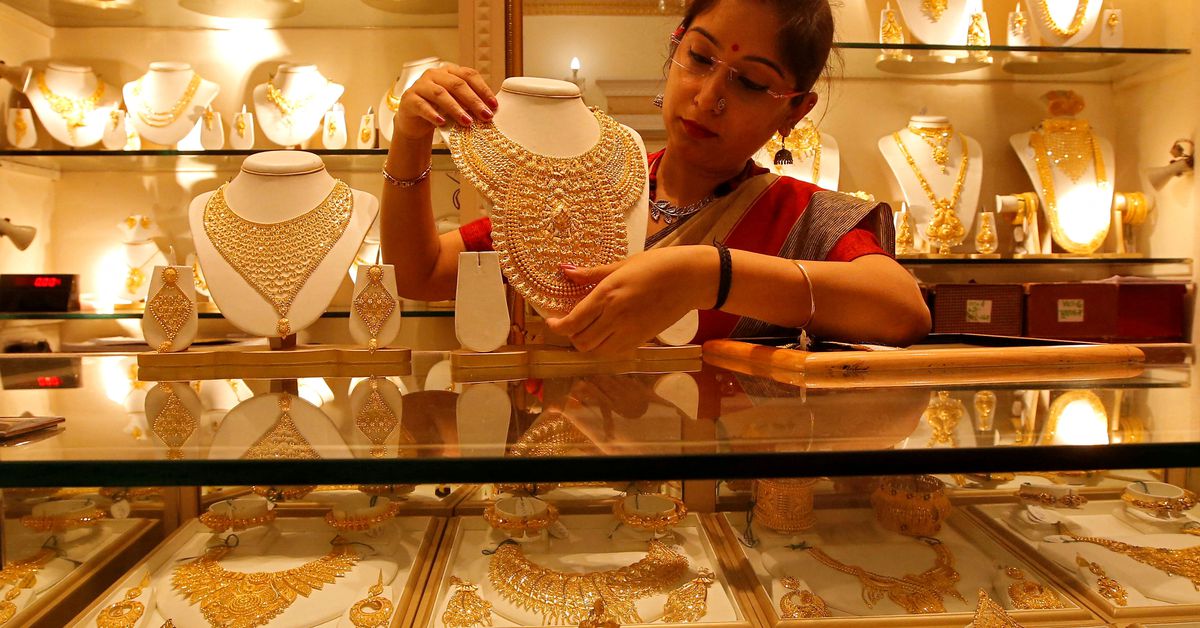
A saleswoman displays a gold necklace inside a jewellery showroom on the occasion of Akshaya Tritiya, a major gold buying festival, in Kolkata, India, May 7, 2019. REUTERS/Rupak De ChowdhuriRegister now for FREE unlimited access to Reuters.comRegister

  • India sees discount of up to $10/oz vs $9 last week
  • Indian buyers will wait for a hefty correction- dealer
  • Buyers in China cautious, conserving their expenditure – analyst

June 10 (Reuters) – Gold discounts in India this week were stretched to their highest level in seven weeks as higher prices repelled demand, while fresh concerns over the spread of COVID in top-consumer China left buyers reluctant to make purchases.This week, dealers in India were offering a discount of up to $10 an ounce over official domestic prices — inclusive of the 10.75% import and 3% sales levies, up from the last week’s discount of $9.Retail buying in India will remain weak, especially from rural areas as farmers focus on planting of summer-sown crops, said a Mumbai-based dealer with a private bullion importing bank.Register now for FREE unlimited access to Reuters.comRegister“In May, prices were attractive. Retail consumers were buying for weddings. Now buyers will wait for a hefty correction,” the dealer said.Weddings are one of the biggest drivers of gold purchases in India.In China, gold was being sold at a discount of $1.5 to a premium of $0.5 an ounce versus global benchmark spot rates .Physical gold demand in China is pretty sluggish, StoneX analyst Rhona O’Connell said, adding that people haven’t been coming back into the market yet after lockdowns were eased, as they are cautious about the outlook and are conserving their expenditure for now.China’s commercial hub of Shanghai faces an unexpected round of mass COVID-19 testing for most residents this weekend – just 10 days after a city-wide lockdown was lifted. read more COVID-related restrictions weighed on demand in China in May and “the average trading volumes of Au9999 – a proxy of Chinese wholesale gold demand – witnessed the weakest May since 2013,” the World Gold Council said in a monthly note.In Hong Kong, gold continued to be sold at a discount of about $1.8 an ounce to a $1 premium, while in Japan, gold was sold between a premium of 50 cents and at par with the benchmark.Register now for FREE unlimited access to Reuters.comRegisterReporting by Eileen Soreng, Bharat Govind Gautam in Bengaluru, Rajendra Jhadav in Mumbai; Editing by Shailesh KuberOur Standards: The Thomson Reuters Trust Principles. .

Oil jumps after Saudi Arabia hikes crude prices

Oil jumps after Saudi Arabia hikes crude prices

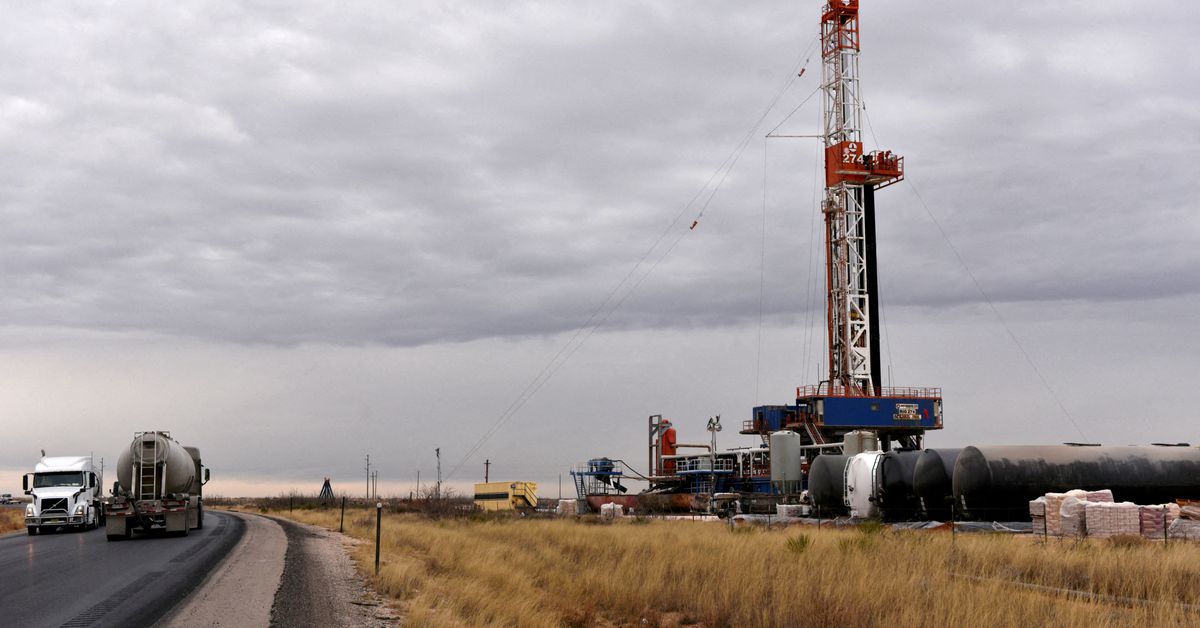
A drilling rig operates in the Permian Basin oil and natural gas production area in Lea County, New Mexico, U.S., February 10, 2019. REUTERS/Nick Oxford/File PhotoRegister now for FREE unlimited access to Reuters.comRegisterMELBOURNE, June 6 (Reuters) – Oil prices rose more than $2 in early trade on Monday after Saudi Arabia raised prices sharply for its crude sales in July, an indicator of how tight supply is even after OPEC+ agreed to accelerate its output increases over the next two months.Brent crude futures were up $1.80, or 1.5%, at $121.52 a barrel at 2319 GMT after touching an intraday high of $121.95, extending a 1.8% gain from Friday.U.S. West Texas Intermediate (WTI) crude futures were up $1.63, or 1.4%, at $120.50 a barrel after hitting a three-month high of $120.99. The contract gained 1.7% on Friday.Register now for FREE unlimited access to Reuters.comRegisterSaudi Arabia raised the official selling price (OSP) for its flagship Arab light crude to Asia to a $6.50 premium versus the average of the Oman and Dubai benchmarks, up from a premium of $4.40 in June, state oil produce Aramco (2222.SE) said on Sunday.The move came despite a decision last week by the Organization of the Petroleum Exporting Countries and allies, together called OPEC+, to increase output in July and August by 648,000 barrels per day, or 50% more than previously planned.”Mere days after opening the spigots a bit wider, Saudi Arabia wasted little time hiking its official selling price for Asia, its primary market…seeing knock-on effects at the futures open across the oil market spectrum,” SPI Asset Management managing partner Stephen Innes said in a note.Saudi Arabia also increased the Arab Light OSP to northwest Europe to $4.30 above ICE Brent for July, up from a premium of $2.10 in June. However, it held the premium steady for barrels going to the United States at $5.65 above the Argus Sour Crude Index (ASCI).The OPEC+ move to bring forward output hikes is widely seen as unlikely to meet demand as several member countries, including Russia, are unable to boost output, while demand is soaring in the United States amid peak driving season and China is easing COVID lockdowns.”While that increase is sorely needed, it falls short of demand growth expectations, especially with the EU’s partial ban on Russian oil imports also factored in,” Commonwealth Bank analyst Vivek Dhar said in a note.Register now for FREE unlimited access to Reuters.comRegisterReporting by Sonali Paul in Melbourne; Editing by Sam HolmesOur Standards: The Thomson Reuters Trust Principles. .

Column: Saudi’s record crude oil price for Asia shows Russia war impact: Russell

Column: Saudi’s record crude oil price for Asia shows Russia war impact: Russell

A view shows branded oil tanks at Saudi Aramco oil facility in Abqaiq, Saudi Arabia October 12, 2019. REUTERS/Maxim Shemetov/Register now for FREE unlimited access to Reuters.comRegisterLAUNCESTON, Australia, April 5 (Reuters) – The jump in Saudi Arabia’s crude oil prices for its Asian customers is a real world example of how the Russian invasion of Ukraine is starting to force a realignment of global oil markets.Saudi Aramco (2222.SE), the state-controlled producer, raised its official selling price (OSP) for its flagship Arab Light crude for Asian refiners to a record premium of $9.35 a barrel above the Oman/Dubai regional benchmark. read more An increase in the OSP had been anticipated, with a Reuters survey of seven refiners estimating the price would rise to a premium of between $10.70 and $11.90. read more Register now for FREE unlimited access to Reuters.comRegisterThis means the actual increase from April’s premium of $5.90 to May’s $9.35 was somewhat below market expectations, but still highlights that refiners in Asia are going to be paying considerably more for Middle East crudes.There are several factors at work driving the increase in Saudi OSPs, which tend to set the trend for price movements by other major Middle East exporters.Spot premiums for Middle East grades hit all-time highs in March, a sign that usually points to higher OSPs as it signals strong demand from refiners.However, these have slumped in recent trading sessions as physical traders mulled the impact of more crude being released from the strategic reserves of major importing nations, led by the U.S. commitment to supply 180 million barrels over a six-month period. read more Another factor driving the increase in the OSPs for May cargoes is the strong margins being enjoyed by Asian refiners, especially for middle distillates, such as diesel.Robust refinery profits are also usually a trigger for producers to raise crude prices, and currently a Singapore refinery processing Dubai crude is making a margin of about $18.45 a barrel, which is more than three times the 365-day moving average of $5.03.But behind all these factors is the dislocation of global crude markets caused by Russia’s Feb. 24 invasion of neighbouring Ukraine.While Russia’s crude oil and refined product exports have not been targeted by Western sanctions, buyers are starting to shun Russian cargoes and seek alternatives.Russia exported up to 5 million barrels per day (bpd) of crude and around 2 million bpd of products, mainly to Europe and Asia, prior to the conflict.IMPACT IMMINENT?Russia’s crude and product exports are yet to show any meaningful decline, with commodity analysts Kpler putting March crude exports at 4.56 million bpd, down only a touch from 4.60 million bpd in February.But the self-sanctioning of Russian crude is likely only to start being felt in April and May, as cargoes loaded in March would have been secured before the Feb. 24 invasion, which Moscow refers to as a special military operation.Asian importers such as Japan and South Korea may start to pull back from buying Russian crude, meaning they will be keen to source similar grades from the Middle East, thereby likely boosting demand for cargoes from Saudi Arabia and other exporters such as the United Arab Emirates and Kuwait.Conversely, China, the world’s biggest crude importer, and India, Asia’s second-biggest, may well try to buy more Russian cargoes, given both countries have refused to condemn Moscow’s attack on Ukraine.India in particular will be keen to secure heavily discounted Russian cargoes, with some reports of Urals crude being offered at discounts of $35 a barrel or more to global benchmark Brent.There are several key questions that remain to be answered, including how much more Russian crude can China and India actually buy, and arrange to transport, especially from the eastern ports that used to mainly ship to European refiners.The United States will not set any “red line” for India on its energy imports from Russia but does not want to see a “rapid acceleration” in purchases, a top U.S. official said last week during a visit to New Delhi. read more It is also still unclear just how much self-sanctioning will cut Europe’s and Asia’s imports of Russian crude.What is likely to happen is that Europe and the democracies in Asia, such as Japan and South Korea, effectively swap with China and India their Russian cargoes for Middle Eastern grades.Even so, this is unlikely to soak up all the Russian crude that will be available, meaning the market will still have to find additional barrels, and Middle East exporters will be likely to continue to keep OSPs at elevated levels.GRAPHIC-Saudi oil prices to Asia: https://tmsnrt.rs/36XkgP8Register now for FREE unlimited access to Reuters.comRegisterEditing by Himani SarkarOur Standards: The Thomson Reuters Trust Principles.Opinions expressed are those of the author. They do not reflect the views of Reuters News, which, under the Trust Principles, is committed to integrity, independence, and freedom from bias. .